
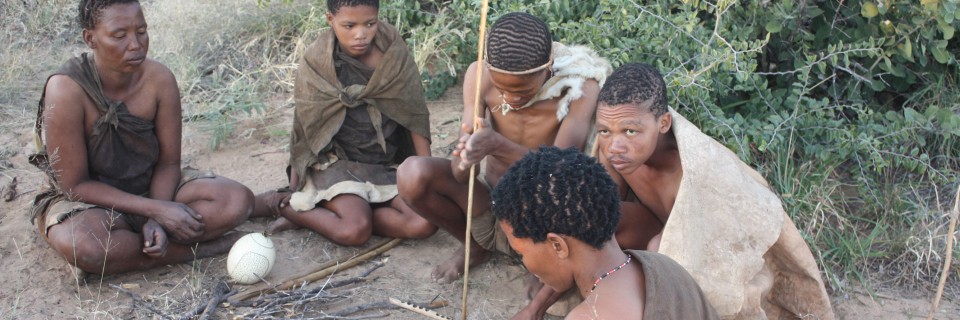
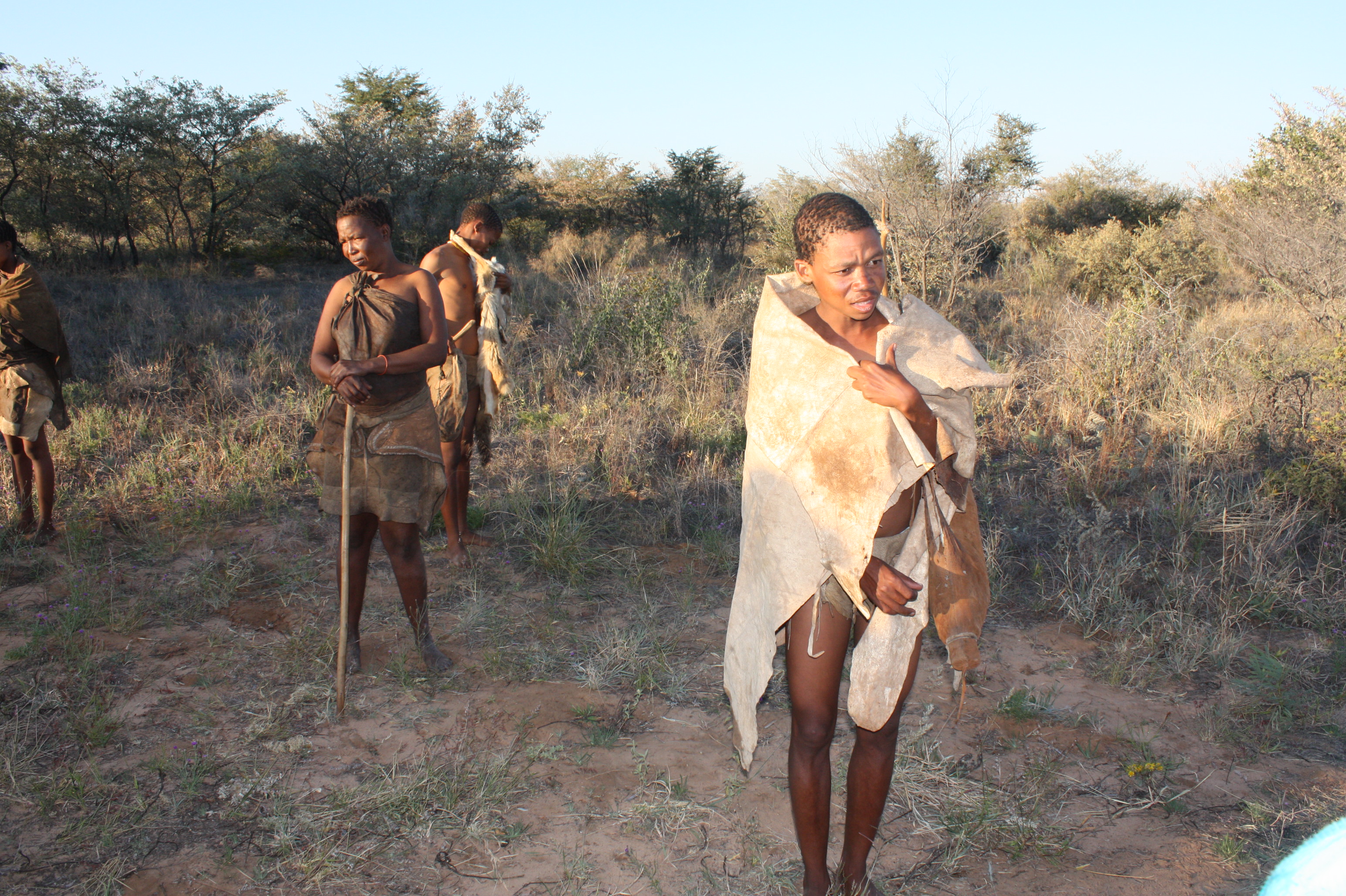
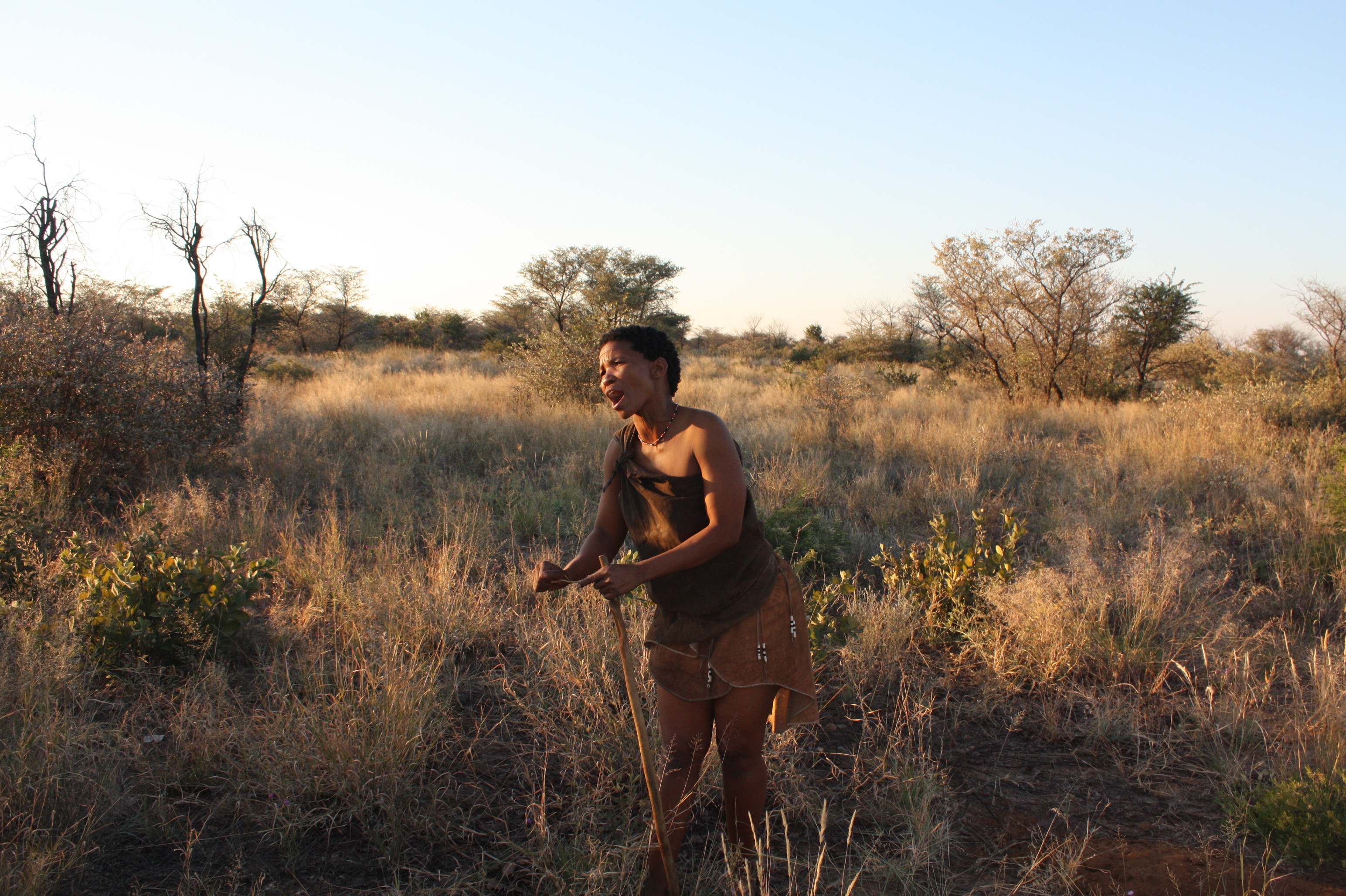
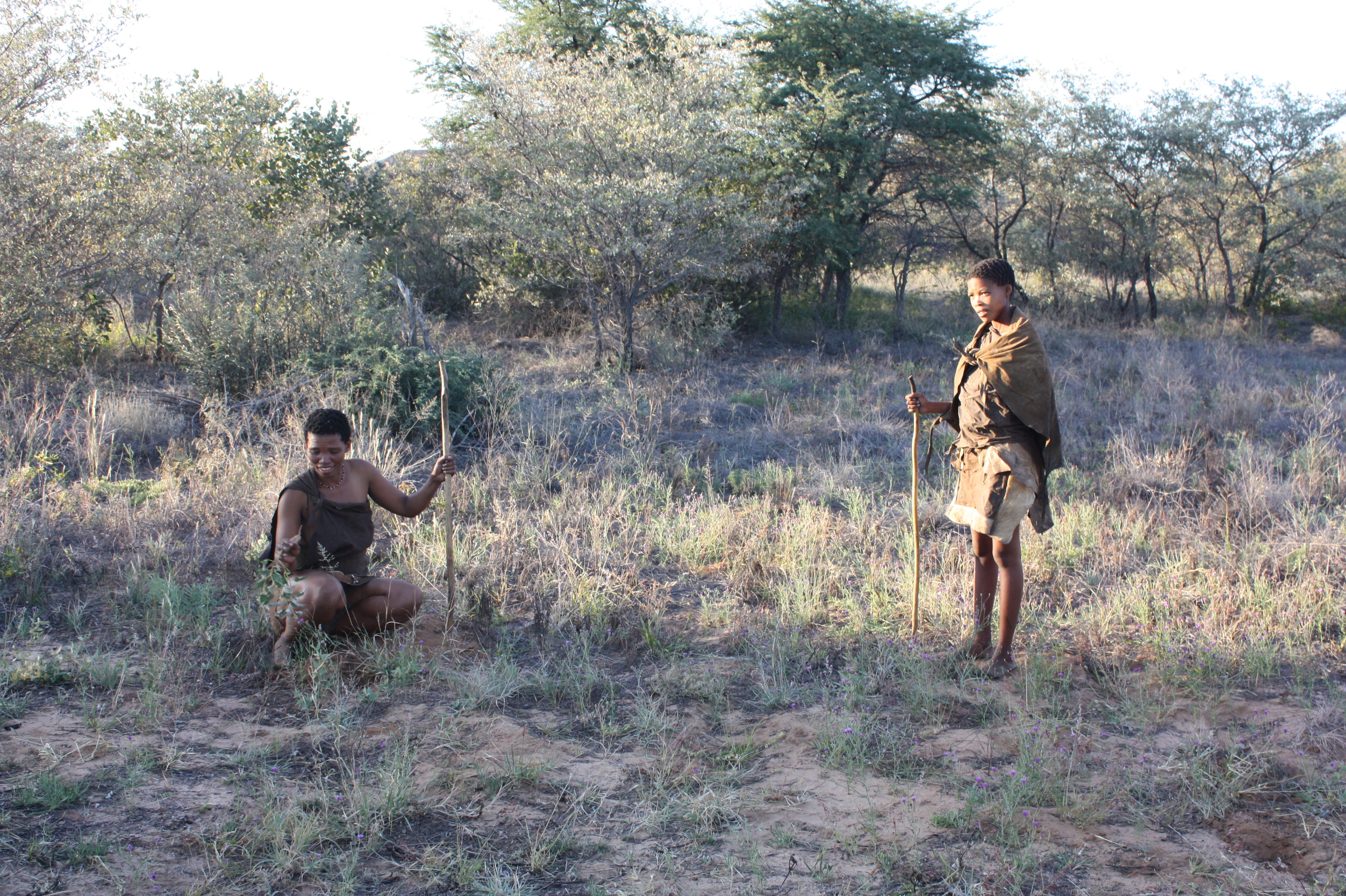
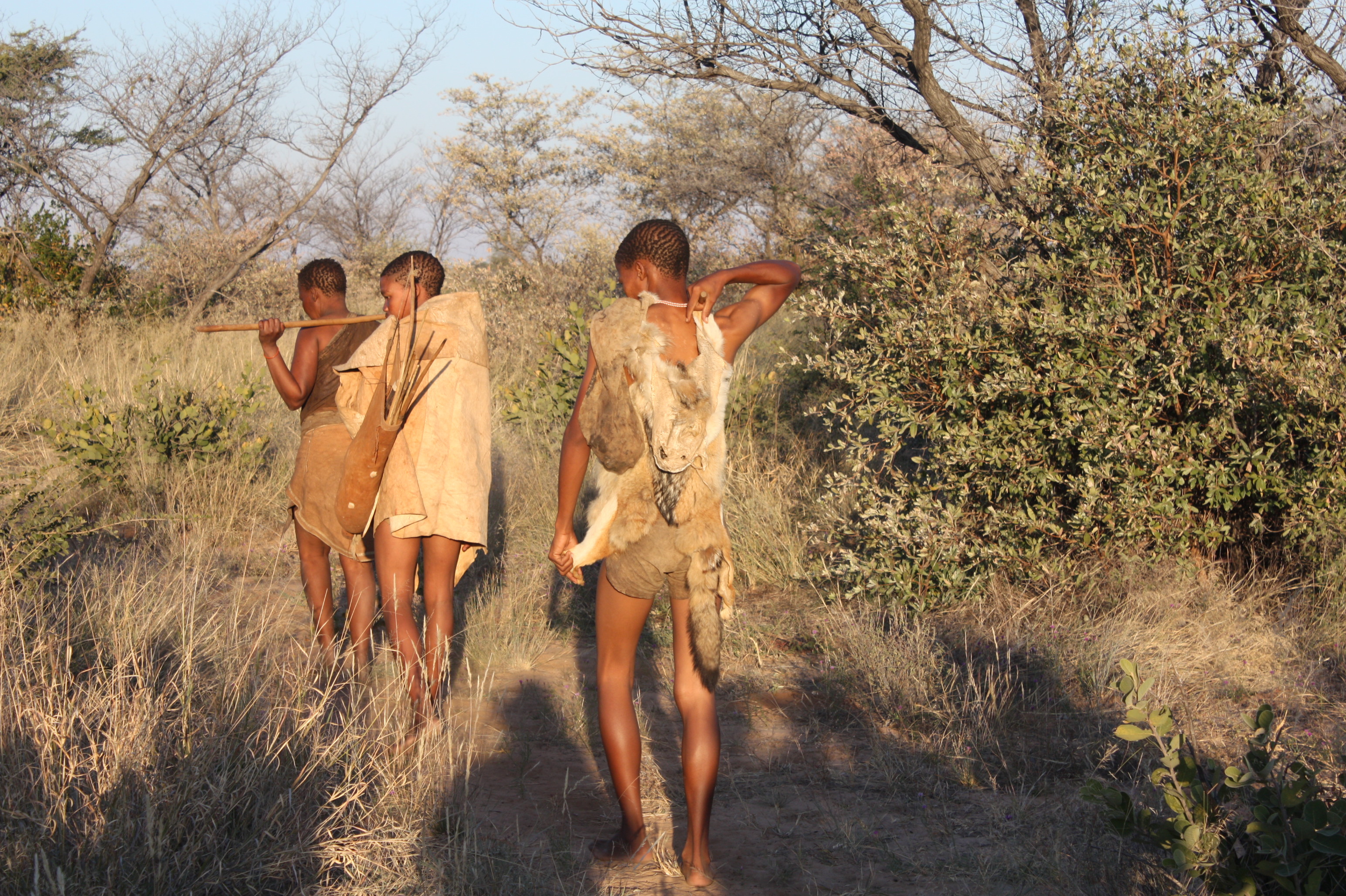
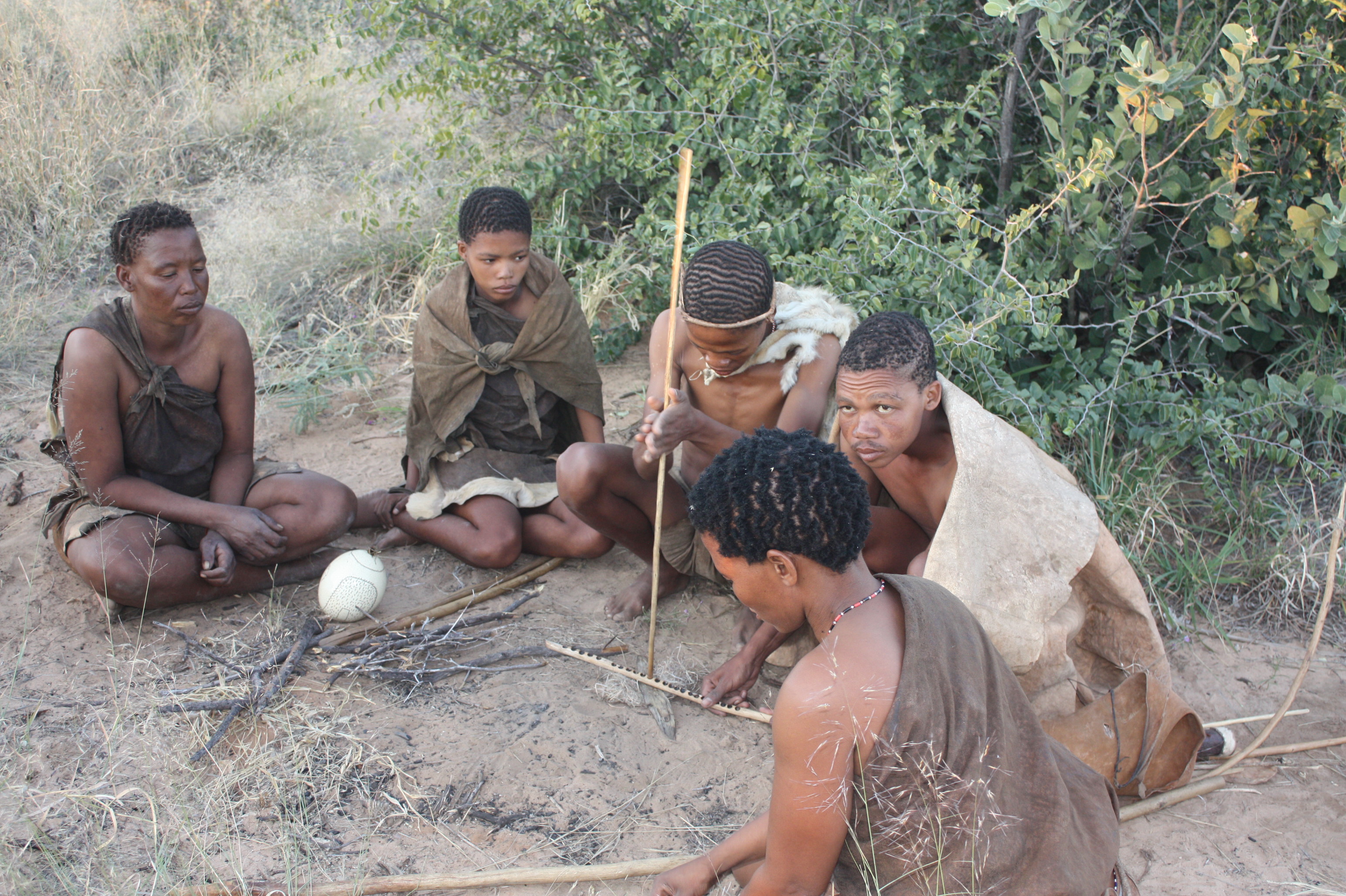
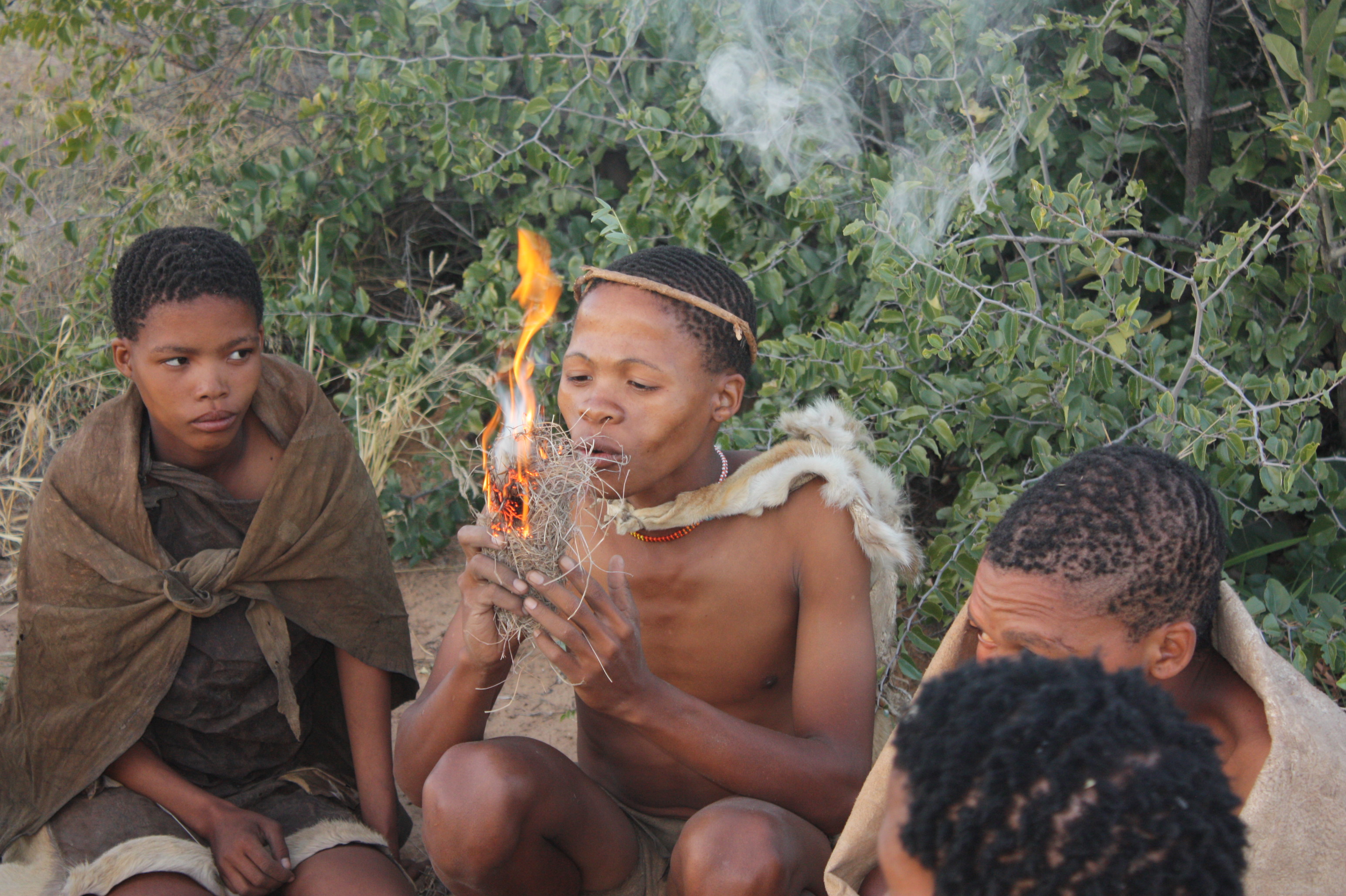
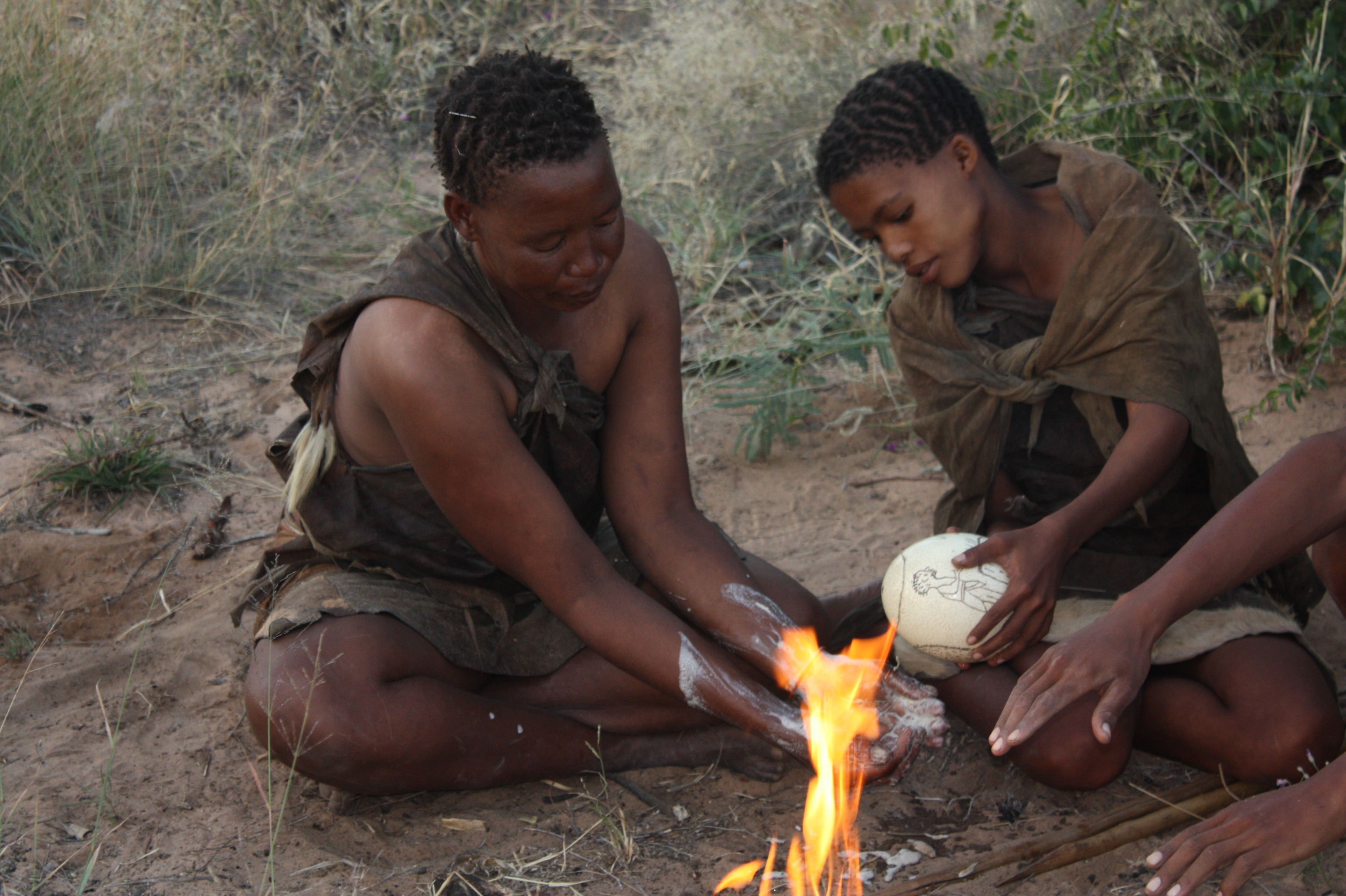
Today was yet another long day of driving (520 km/325 m) plus a border crossing to get to Ghanzi in Botswana. There was went on walk with the San People. The Bushmen of Southern Africa are the oldest indigenous inhabitants of Southern Africa and have lived off the land in symbiosis for hundreds of years. The San people have inhabited large parts of Southern Africa including the regions and deserts of southern Namibia and Botswana. They are known colloquially as bushmen, this however is a broad term used to describe indigenous people of Southern Africa. They took us on a walk into the bush and showed us how they live. They would walk up to a plant that Westerners would probably call a weed and then dig it up. They then explained what they would use the root for. They used different plants to cure headaches, stomachaches, cuts and bruises, and/or soap. Here is a video of one of the women talking. At each different plant one of the bushmen would explain it and then the translator would tell us in English. Here you can almost figure out what she’s saying. It’s an interesting language. https://youtu.be/N9flEBVP1Ek They also showed us how they start a fire and he did it using only sticks in under 90 seconds which is faster than some of us can do with matches. Later that night they came back and put on a dance show for us. Here’s a link to a short video of that. http://youtu.be/QEZLzAWMpus There are some interesting facts about Botswana at the bottom if you’re interested.
In the early 1960s, Botswana ranked as one the world’s poorest countries, with GDP per capita of less than $200. Less than 2% of the population had completed primary school and fewer than 100 students were enrolled in university. In the entire country there was only one 12-km/7.5-mile long paved road. Then in 1967, diamonds were discovered and two diamond areas were found within 15 years. Botswana became the world’s leading producer of gem-quality stones. Today, Botswana still extracts around ¼ of the world’s diamond supply. Where other African countries have squandered the proceeds of their natural resources or descended into conflict, Botswana decided to use the new found wealth and spread it throughout the small population equitably. The “diamond dollars” have been put into infrastructure, education, (adult literacy stands at 85% now) and health. In 1994, Botswana became the first country in the world to graduate from the UN’s Least Developed Country Status. From 1996 to 2005, Botswana’s economy grew faster than any other in the world. In 2011, Botswana ranked 32nd on Transparency International’s Corruption Perception Index, the highest ranking of any country in Africa. In the same year, Botswana’s GDP per capita was a respectable US $16,200 compared with $500 in Zimbabwe, $1600 in Zambia, $7500 in Namibia, and $11,100 in South Africa.
Today, around 1/3 of Botswana’s land mass is officially protected in some form, representing the highest proportion of protected areas in the world. For many years, this has been the prime destination for safaris due to the high population of animals. Today Botswana has more elephants than anywhere in Africa. One reason for this is they are very strict about poaching. It’s well known that if a policeman, solider, or ranger sees poaching, they will shot the person on the spot. Since this is such a common fact, poachers stay away.
Recent Comments