

Paihia is the birthplace of New Zealand. It was here that the Treaty of Waitangi was signed on February 6th, 1840. It was signed by representatives of the British Crown and representatives of the Maori tribal groups. On that day only 43 tribal chiefs signed the document, but eventually over 500 would sign. The Treaty made New Zealand a part of the British Empire, guaranteed Māori rights to their land and gave Māori the rights of British subjects. There are differences between the English version and the Māori translation of the Treaty, and since 1840 this has led to debate over exactly what was agreed to at Waitangi. The Waitangi Treaty Grounds is considered one of New Zealand’s most important sites and passport holders get in for free.

A Maori canoe. This is the world’s largest ceremonial war canoe and it required a minimum of 76 paddlers to handle safely on the water but it could fit up to 150 men.

The Treaty House was the home of John Busby an official representative of the British government. This was his house in Sydney and he had it dismantled, shipped to New Zealand, and reassembled here so our guide called it New Zealand’s first Ikea house.
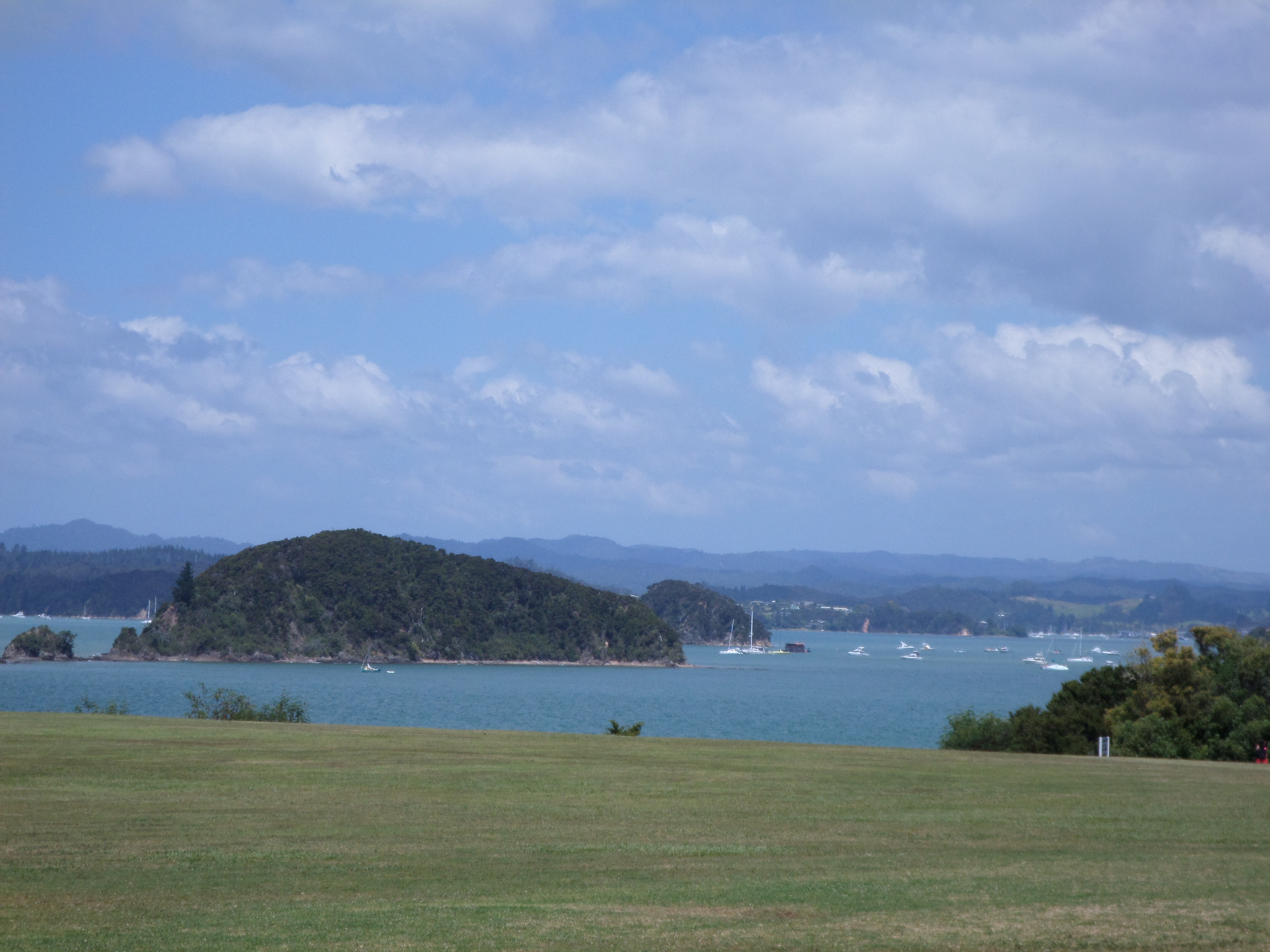
View from the Treaty House.
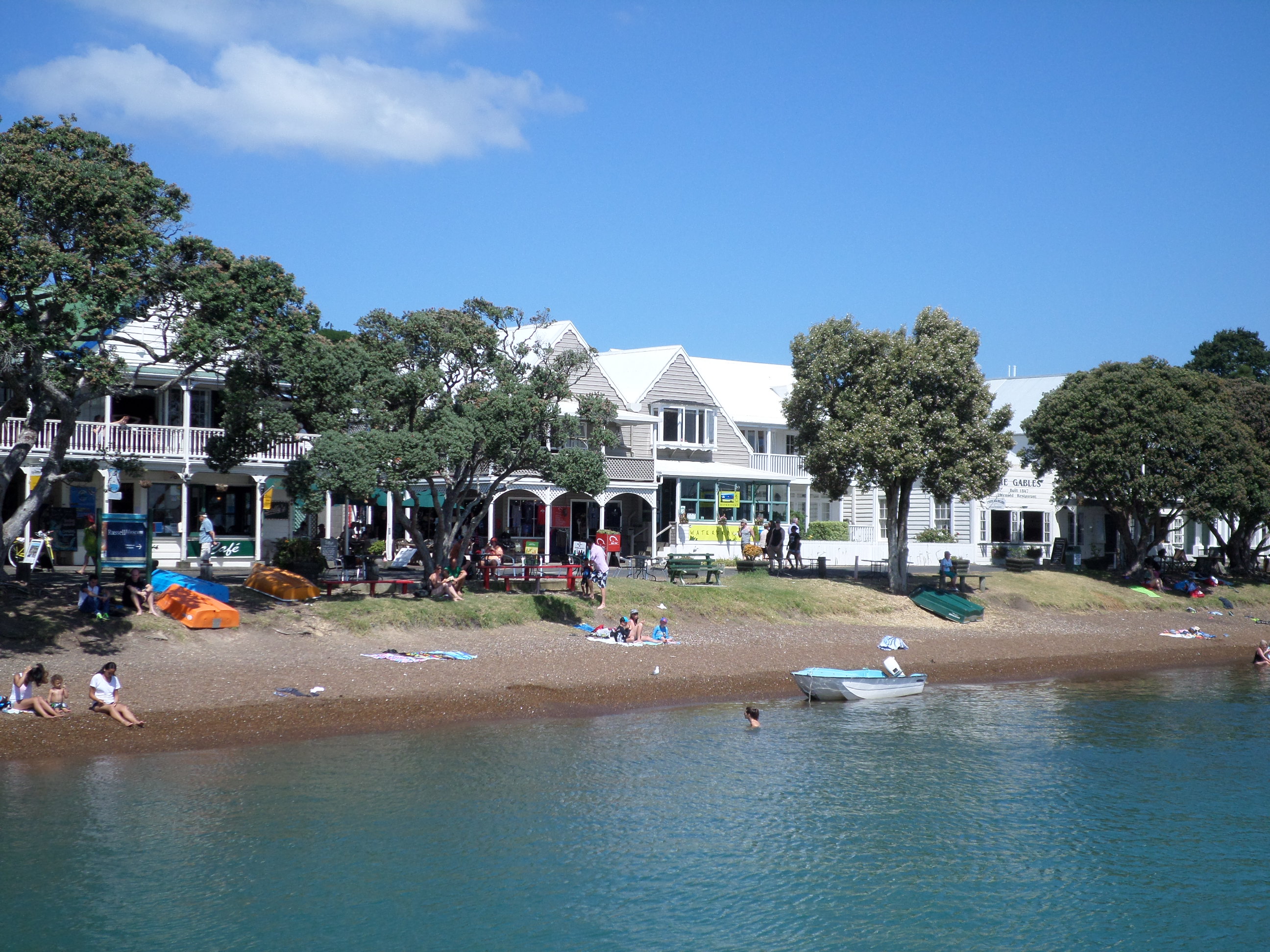
Russell is just a ten minute ferry ride from Paihia. At one time it was known at “the hellhole of the Pacific.” It was New Zealand’s first European settlement and it quickly became a magnet for fleeing convicts, whalers, and drunken sailors. After the signing of the Treaty of Waitangi, Russel was the captial, but it was moved to Auckland by 1841.
On my second day in Paihia, I went scuba diving. I still don’t have an underwater camera so I have no pictures unfortunately. The day started off great when three dolphins were swimming along side our boat. One of them wanted to show off and he was jumping about two or three feet out of the water. It was like something you’d see at Sea World, but it was the real thing. Totally awesome. The first dive was to a ship wreck. The HMNZS Canterbury was in service from 1971 to 2005. Once she was decommissioned, the Bay of Islands Charitable Trust bought her for only $1, but it cost almost one million dollars to sink it. This covered the cost to remove all toxic metals, containment, and scrap metal all of which had to be removed by hand. Then they had to pay for the actual explosives to sink it. The ship is over 110m (370 ft) so it’s hard to see it all, but there’s a couple places where divers can swim through. The second dive was at the reef and it was great. We saw stingray, moray eels, lobster, and nudibranches. There’s also a large cave to swim into and explore. It was a great day out!
Recent Comments